I hear business owners say it all the time:
“I don’t really want to grow much more.”
On the surface, that sounds perfectly reasonable. Sensible, even. Not everyone wants a bigger business, more people, more responsibility. And to be clear, there’s nothing wrong with choosing not to grow.
But here’s the thing.
The people who say this are usually already working very hard. Long hours. Constant decisions. Carrying far more of the business in their head than they should be. And when you listen properly, what they’re really saying isn’t “I don’t want to grow”.
What they mean is:
“I don’t want what I think growth will do to me.”
What they say vs what they mean
When most owners imagine growth, they don’t picture freedom, clarity or control. They picture:
- Longer hours
- More people problems
- More pressure
- More decisions landing on their desk
- Less time, not more
In their mind, growth doesn’t look like progress.
It looks like a bigger trap.
And if you already feel stretched, tired, or overly relied upon, that makes perfect sense. Why would you deliberately choose to make that worse?
So, they settle. They cap ambition. They tell themselves they’re happy where they are — even when they’re quietly frustrated.
The unspoken fear no one talks about
The real fear isn’t risk. It isn’t failure. And it isn’t even money.
The real fear is becoming even more needed.
Most owners at this stage already feel like:
- Everything runs through them
- The business can’t cope without them
- Taking time off feels risky
- Mistakes feel personal
So when someone suggests growth, what they hear is:
“More responsibility for you.”
“More people relying on you.”
“More things you’ll have to hold together.”
Staying where they are feels safer. Not easy — just safer.
This isn’t laziness or lack of ambition. It’s self-preservation.
The real issue isn’t growth — it’s design
Here’s the uncomfortable truth.
Growth shouldn’t require more of the owner.
If it does, something in the business design is broken.
When growth automatically means longer hours, more stress and more dependency, it tells you one thing very clearly: the business is too reliant on you already.
The problem isn’t ambition.
It’s owner dependency.
If every decision, customer issue, team problem or piece of progress still needs you, then adding more volume will only amplify the pressure. That’s not growth — that’s scale without structure.
Why standing still isn’t neutral
Some owners respond by trying to “hold the line”. Don’t grow. Don’t shrink. Just keep things steady.
But standing still isn’t neutral.
Complexity doesn’t freeze just because revenue does. People change. Markets shift. Expectations rise. Systems that were once “good enough” quietly become constraints.
What often happens is this:
- The business becomes heavier, not lighter
- Decision fatigue increases
- Margins get squeezed
- Frustration grows — slowly, quietly
Avoiding growth doesn’t remove risk.
It just hides it for a while.
What healthy growth actually looks like
The best growth I see doesn’t look dramatic from the outside.
It looks like:
- Clearer roles
- Better decisions being made without the owner
- Fewer emergencies
- More predictable performance
- The owner stepping back without things falling apart
It’s not about doing more.
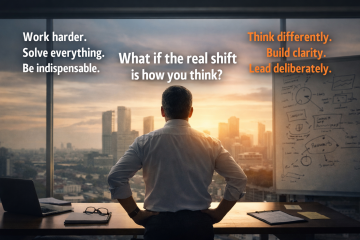
It’s about being needed less.
Healthy growth reduces pressure before it increases revenue. It replaces heroics with structure. It turns the owner from the engine into the architect.
And crucially, it creates optionality — the ability to choose how involved you want to be, rather than feeling trapped by what the business demands.
So do you really not want to grow?
Maybe you genuinely don’t. And that’s fine.
But most of the time, when an owner says they don’t want to grow, what they really mean is:
“I don’t want the business to take even more from me than it already does.”
That’s an important distinction.
Because one is a conscious choice.
The other is a warning sign.
If this has made you pause, good. It should. Not because you need to grow at all costs — but because you deserve a business that works for you, not the other way around.
And if you recognise yourself in this, that’s probably worth a conversation.
Not to sell anything. Just to think properly about what growth could look like — if it didn’t cost you more of yourself.
By Andy Walter
Follow me on LinkedIn, Facebook, Twitter or YouTube
or Get in touch.
Take the Free Business Clarity Assessment
#Thinkdifferently #Growth #Awareness #Connection #Purpose #Meaning #Selflessness #Development #Mindset #Passion #Improvement #Action #Success #Coaching

0 Comments